
A new Stage 2: math for ages 7 to 8, numbers to 100 and carrying
In shortThe provisional Stage 2 is rebuilt into 44 units and 157 steps, following the order of a workbook for 7-year-olds. Stars you earned and page addresses stay the same.
What children learn
It starts with numbers to 9, grows to 100 and carries on to carrying and borrowing. It is all free in Stage 2.
| Topic | What it covers |
|---|---|
| Numbers to 9 | Counting, zero, first to ninth, one more and one less |
| Splitting and joining | Split into two, join two parts, the pairs that make 10 |
| Adding and subtracting | Writing and reading sentences, sum and difference, adding and taking zero |
| Comparing | Length, height, weight, size and amounts |
| Numbers to 100 | Tens and ones, even and odd, greater and less signs |
| Two-digit math | No-carry adding and subtracting, column math, three numbers |
| Telling time | The hour, half past, my day |
| Carrying and borrowing | Make 10 to add, use 10 to subtract |
| Patterns | Shape patterns and +10, +3, −5 number patterns |
New problem pictures
We drew new pictures for things that are hard to explain in words.
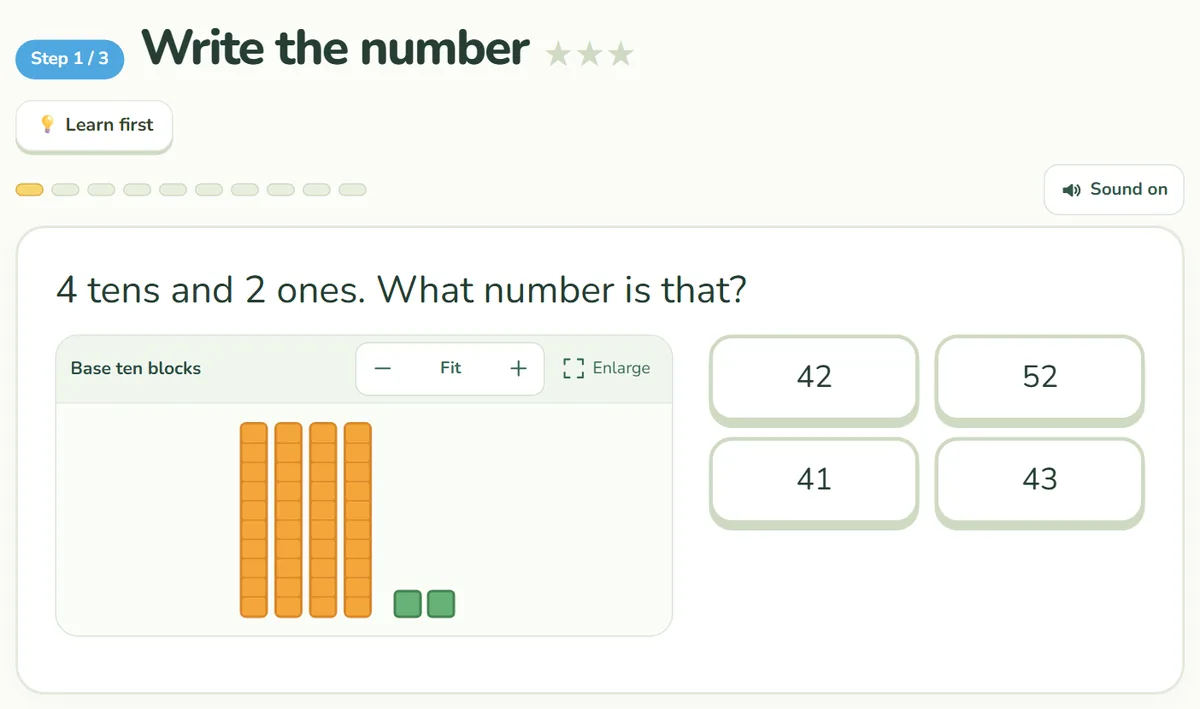
- Base ten blocks: rods of ten and single cubes make two-digit numbers easy to see.
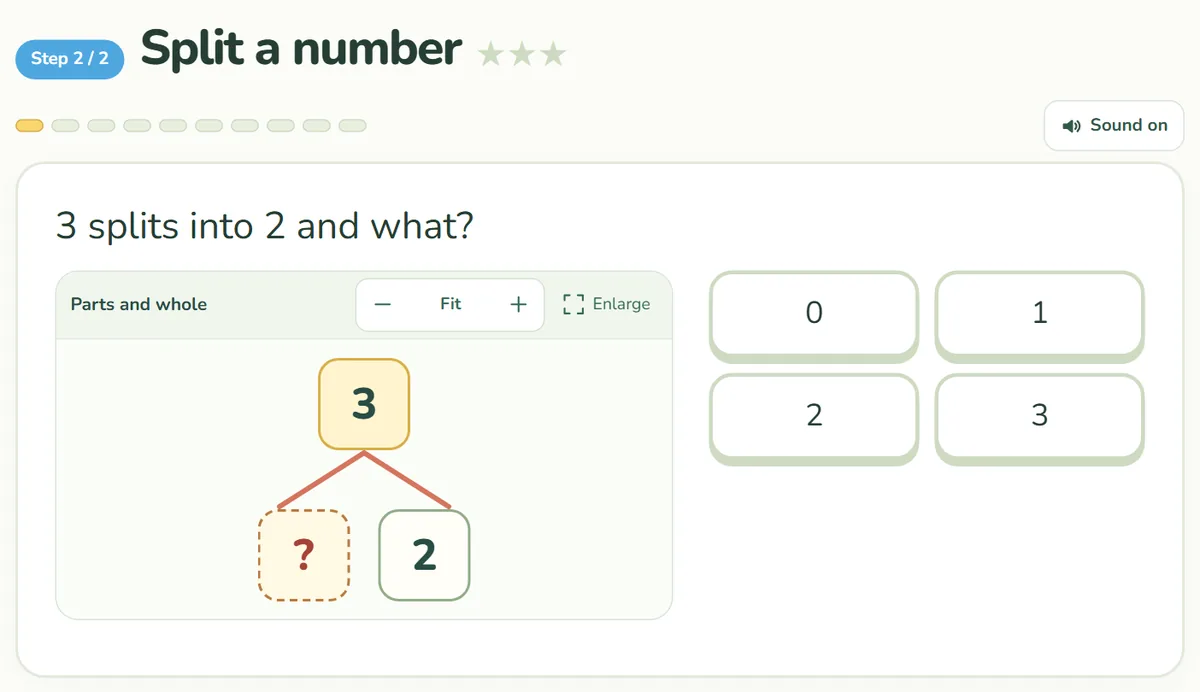
- Parts and whole: one number splits into two and joins back together.
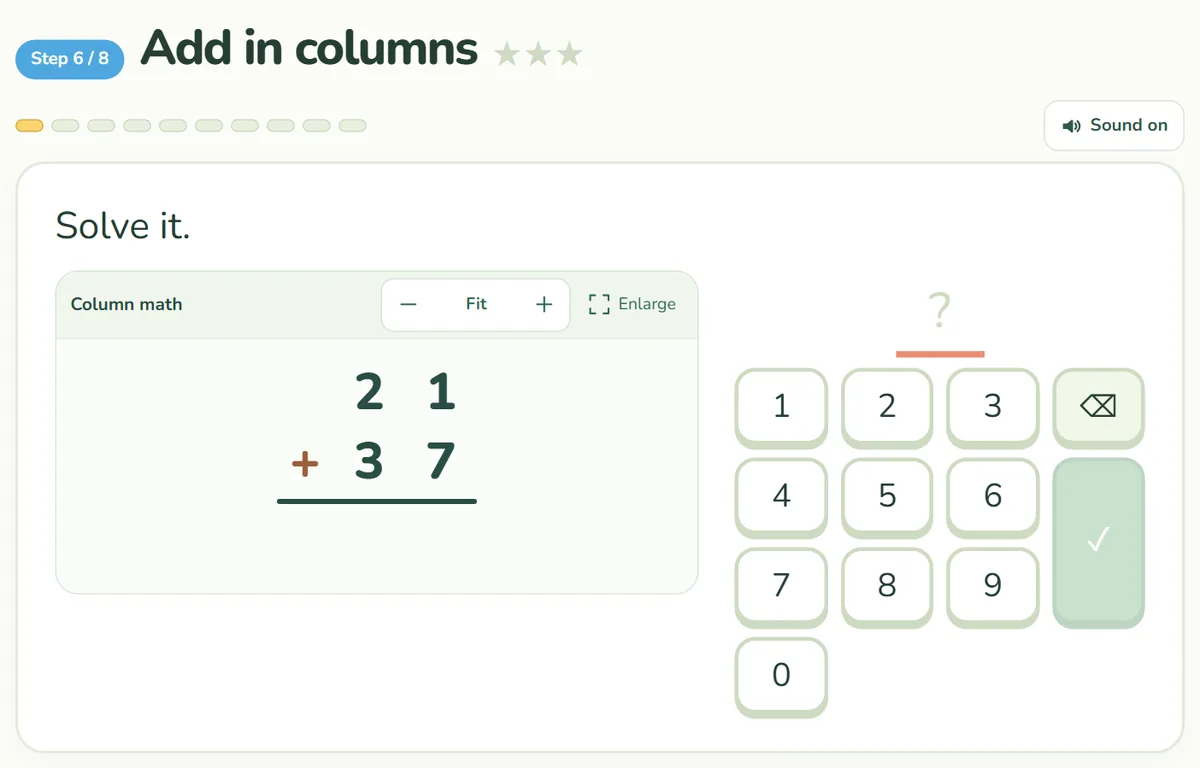
- Column math: tens and ones sit in their own columns, with the current one marked.
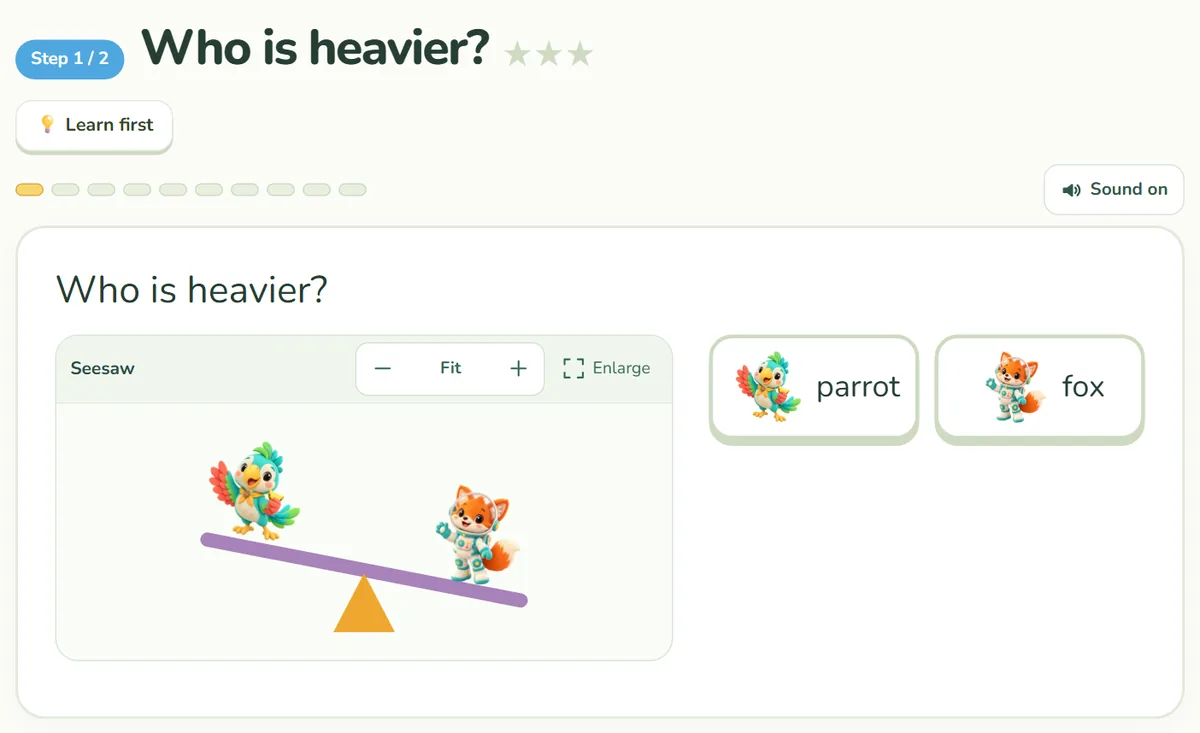
- Seesaws and buckets: compare weight and amounts in a picture.
Your records are safe
The seven units from the provisional course keep their addresses and step numbers inside the new course, so stars already earned stay. Stages 3 to 7 are still provisional and will be split further in turn.
The guide to math for ages 7 and 8 explains how to get started.