Math for ages 7 and 8 at home: a guide to Stage 2
In shortStage 2 runs from numbers to 9 up to carrying, in 44 units and 157 steps. Work through the units in order, moving quickly past what is easy.
What Stage 2 covers
| Topic | How it is practised |
|---|---|
| Numbers to 9 | Count pictures and match numerals and names. |
| Splitting and joining | Split a number in two and join it back. This is the root of adding and subtracting. |
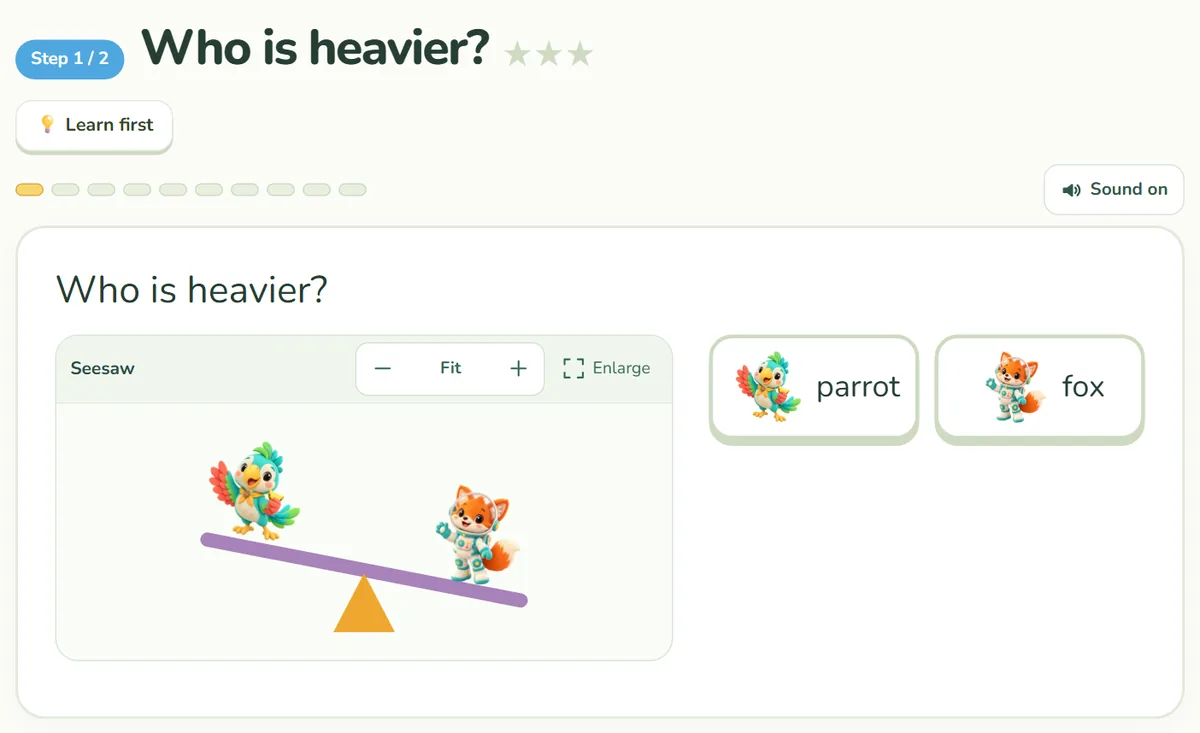
| Comparing | Compare length, height, weight, size and amounts in pictures. |
| Numbers to 100 | See numbers as tens and ones. |
| Two-digit addition | Work the ones, then the tens. |
| Telling time | Read the hour and half past. |
| Make 10 to add | Split one number to make 10 first. |
Start by grouping in tens
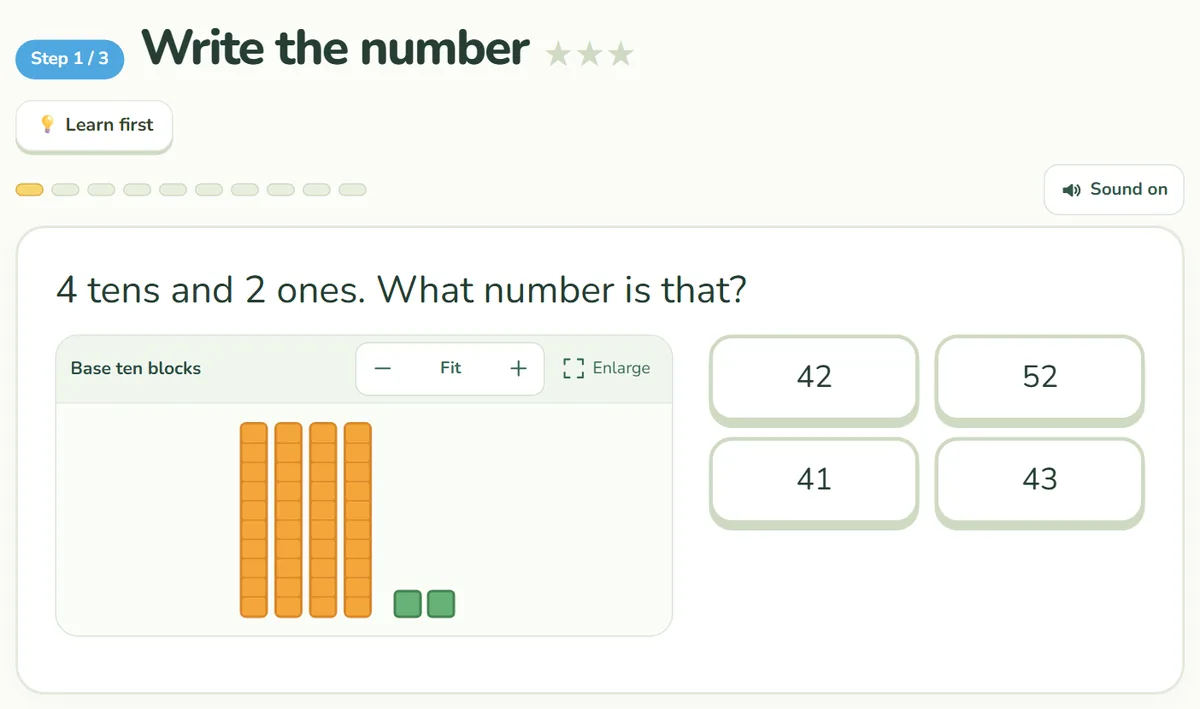
Two-digit numbers are hard because each place means something different. Let your child first see with base ten blocks that 37 is 3 tens and 7 ones. Blocks or coins at home work well for grouping in tens too.
Column math starts with the ones
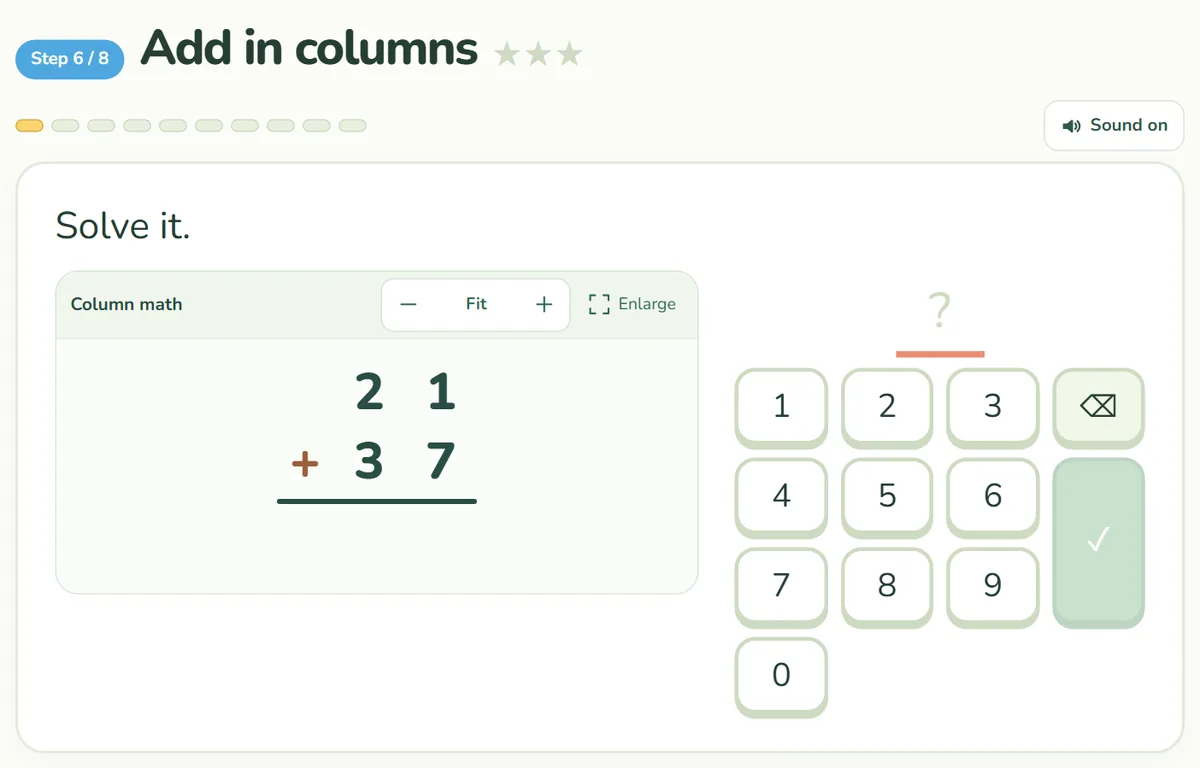
In the column math steps, the column to work on is colored. Help your child build the habit of looking at the ones first. Only no-carry problems appear here.
Carrying means making 10
For 9 + 3, split 3 into 1 and 2 to get 9 + 1 + 2, which is 10 + 2. Make 10 to add practises this one move at a time, and Use 10 to subtract does the same for subtraction.
If carrying gets stuck, go back to Split 10. The pairs that make 10 (1 and 9, 2 and 8, 3 and 7, 4 and 6, 5 and 5) make the next part much easier.
This order is only a suggestion. Children find different methods comfortable, so if another method gets it right, praise that too.
Comparing and time belong in daily life
Words like heavier, bigger and more are easiest to learn by comparing real things at home. For time, ask about your child’s own day, such as when dinner or bedtime is.